Retail Repairs and Maintenance That Work
Managing retail maintenance across multiple stores is harder than the repair itself — how to control cost, speed, quality and risk. Insights by Ticked Off.


A leaking ceiling during trade. A failed air conditioner on a 35-degree day. A shopfront door that will not close at 8pm.
Retail maintenance happens in public. Customers see it. Store teams deal with it. And when the process behind the repair is not working properly, facilities teams can spend enormous amounts of time chasing contractors, approvals and updates.
The repair itself is rarely the difficult part. The real challenge is managing hundreds or thousands of maintenance requests across multiple stores while controlling cost, response time, quality and risk. That is the difference between simply arranging repairs and actually managing retail maintenance.
Retail maintenance is part of the customer experience
Customers notice far more than most maintenance reports capture. They see damaged joinery, chipped counters, poor lighting, faulty doors, tired paintwork, broken amenities and air conditioning that is not working properly. They may never formally complain, but these things influence how a store feels. For premium retailers in particular, presentation is part of the product.
There is also a direct operational cost when maintenance issues are allowed to linger. Small defects become larger problems. Store teams create temporary workarounds. Managers chase updates. Facilities teams spend time coordinating trades instead of analysing performance and improving the portfolio.
And some issues move very quickly from inconvenience to risk. Damaged flooring, faulty emergency lighting, leaking services or an unsecured shopfront can have implications for safety, compliance, insurance and business continuity. Good retail maintenance therefore protects far more than the physical asset — it helps protect customers, employees, brand standards and trade.
The problem is usually not finding someone who can fix it
Most retailers are not short of contractors. The challenge is getting the right contractor to the right location, with the right information, at the right time and at an appropriate cost. That becomes significantly harder as a store network grows.
A model where individual stores arrange their own repairs can work across a very small portfolio. Across dozens or hundreds of sites, it quickly creates inconsistency. Pricing varies. Workmanship varies. Response times vary. Documentation varies. And head office often has very little visibility over what is actually happening. Even when the repair gets completed, a large amount of administration can remain with the internal team.
A managed retail repairs and maintenance model changes that. Instead of every store solving each problem independently, maintenance requests are triaged through a consistent process, matched with the appropriate contractor, tracked through completion and recorded centrally. The practical outcome should be simple: less administration for internal teams and greater control over cost, quality and performance.
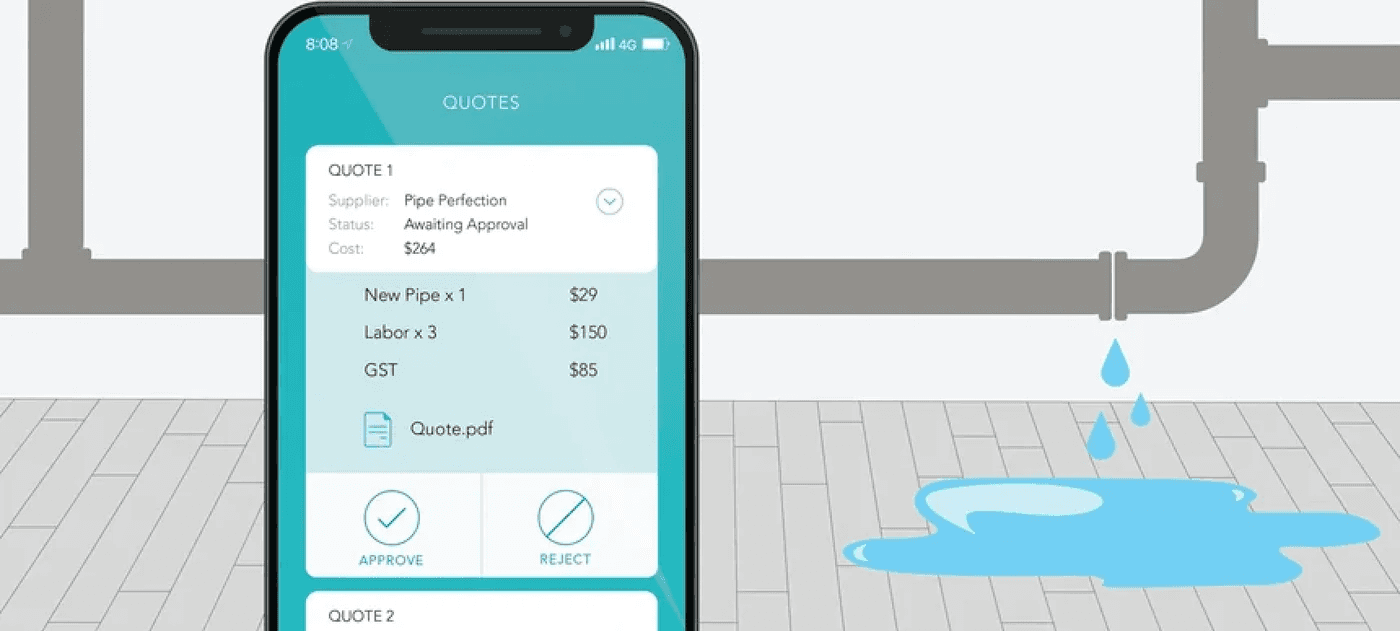
The cheapest contractor is not always the cheapest outcome
One of the most common mistakes in maintenance procurement is focusing too heavily on hourly rates. Hourly rates are easy to compare. The total cost of completing the job is more important.
A contractor with a lower hourly rate who attends twice, diagnoses a fault incorrectly, requires additional approvals or creates additional administration can quickly become more expensive. The real cost of maintenance includes:
contractor charges
repeat visits
travel and call-out costs
internal administration
delays
unnecessary approvals
disruption to the store
temporary repairs
and whether the problem was actually fixed properly.
Across a large retail portfolio, small inefficiencies multiplied across thousands of jobs can become very large numbers. The better question is not simply "Who has the cheapest rate?" It is "What does it actually cost us to complete the job properly?"
Speed matters, but the right response matters more
Retail maintenance is not a single-speed environment. A damaged shopfront affecting security requires a very different response from a loose cupboard hinge in a staff room. A major plumbing failure during trade is different again.
Good triage means understanding the urgency, safety risk, effect on trade and likely repair path before deciding what happens next. Some problems require an immediate make-safe followed by a permanent repair. Others can be scheduled during quieter trading hours. Some jobs can be grouped into planned works to reduce travel and call-out costs. The aim should not be to send the fastest available contractor to every problem — it should be to provide the right response for the situation.
Internal teams should not spend their day chasing contractors
This is one of the largest hidden costs in facilities management. Highly experienced property and facilities people should not be spending large parts of their day asking whether an electrician attended, chasing a plumber for an ETA or calling a store to confirm whether work was completed. Yet in many businesses, that is exactly what happens.
The coordination behind a seemingly simple maintenance request can involve the store team, facilities, property, finance, a contractor, centre management and sometimes a landlord. Every additional email, phone call and approval adds friction. Across a national store network, that administration compounds quickly.
A specialist managed service should remove as much of that noise as possible. The store reports the issue. From there, the maintenance process should manage the trade, attendance, quotation, approvals, progress, completion and reporting. Internal teams retain visibility and control without needing to personally coordinate every step.
Preventive maintenance is where cost control starts
Reactive maintenance will always exist. Stores are high-traffic environments and assets fail. But a portfolio that operates almost entirely reactively will generally spend more than one that identifies where preventive maintenance makes financial sense.
Air conditioning is an obvious example. Waiting until a unit fails during summer can result in emergency attendance, unhappy employees and customers, temporary equipment and potentially lost trade. Planned servicing will not eliminate every failure, but it can materially reduce disruption. The same principle applies to heavily used assets such as doors, lighting, plumbing, amenities and other store equipment.
The important point is that preventive maintenance should not simply mean putting everything on a recurring schedule. The strategy should reflect asset age, failure history, store traffic, replacement cost, lease term and the consequence of failure. Different stores and different assets may justify different approaches.

A repair is not complete simply because somebody attended
Speed is important, but completion quality matters just as much. A fast repair that fails again a week later is not a good result. Neither is a technically functional repair that leaves a customer-facing area looking poor.
Retail introduces standards that do not always exist in other environments. Signage needs to align properly. Finishes need to match. Work often needs to occur outside trading hours. Contractors need to understand access requirements and centre rules. Customer disruption needs to be minimised. That is why retail experience matters — a technically capable contractor can still deliver a poor retail outcome if they do not understand the environment they are working in.
Data should tell you what to do next
Good maintenance data should do more than produce a dashboard. It should help change decisions. If the same air-conditioning unit is being repaired every few months, the question is no longer how quickly the next technician can attend — it becomes whether continuing to repair the asset makes financial sense.
If one contractor has substantially more repeat visits than another, that should be visible. If one group of stores has materially higher plumbing costs than comparable locations, the reason should be investigated. If emergency work is increasing across an ageing asset class, that may support a capital replacement program.
This is where maintenance moves from reactive administration into operational intelligence. When work orders, costs, assets, response times and outcomes are visible in one place, businesses can identify patterns that individual stores would never see — allowing property and facilities teams to make better decisions about contractors, preventive maintenance, asset replacement and capital investment.
Multi-site retail requires a different maintenance model
The complexity of maintenance increases sharply as the number of sites grows. One store might have ten maintenance issues. One hundred stores might generate thousands. At that point, spreadsheets, individual contractor relationships and manually chasing updates stop being practical.
The operating model needs to provide consistency across the network while still recognising that every job is different. That means having clear processes around triage, contractor selection, approvals, attendance, cost control, communication, completion, compliance and reporting. It should also provide enough flexibility to work with different landlords, shopping centres, trading hours and store formats. Retail maintenance is operationally messy by nature. The system behind it should not be.
What good retail repairs and maintenance should look like
At store level, the experience should be simple. Report the issue. Know it has been received. Know what is happening next. Store teams should not need to become facilities coordinators.
At head office level, the experience should provide visibility and control. You should be able to understand what is open, what it is costing, where delays are occurring, which contractors are performing well and where the same problems are happening repeatedly.
And at an executive level, the data should help answer larger questions. Are maintenance costs increasing because the portfolio is ageing? Are particular asset types becoming uneconomic to repair? Is a contractor genuinely inexpensive, or simply generating more repeat visits? Would targeted capital expenditure reduce future operating costs? Those are far more valuable questions than simply asking how many work orders were closed last month.
Choosing the right maintenance model
There is no single maintenance model that suits every retailer. A small store network with a stable asset base may be able to manage maintenance internally with ad hoc contractor support. Larger businesses with multiple formats, high work-order volumes and geographically dispersed stores generally require a more structured approach.
The warning signs are usually easy to recognise. Store teams are chasing contractors. Facilities teams are constantly following up jobs. Quotes and approvals sit in email. Costs vary widely between regions. Repeat faults are difficult to identify. Reporting requires manual effort. And nobody is completely certain what maintenance is really costing. When those problems appear, the issue is usually not the contractors themselves — it is the operating model around them.
Retail maintenance should become easier as your network grows
Ticked Off was built around that principle. We manage retail repairs and maintenance through one operating layer that combines technology, contractor management, triage, cost control and reporting. The objective is not simply to dispatch trades — it is to remove unnecessary administration, create transparency and help clients understand what their maintenance is actually costing and where it can be improved.
Retail maintenance will never be glamorous. But it is one of the clearest indicators of how well a multi-site business operates. When stores are safe, compliant, well presented and consistently operational, the result is not simply fewer defects. It is less disruption, less administration, better information and better decisions.